

Government of Tamil Nadu
Tamil Nadu Forest Department
Project Nilgiri Tahr / நீலகிரி வரையாடு திட்டம்
Tamil Nadu Forest Department
Second Synchronized Survey – Expansion and New Discoveries
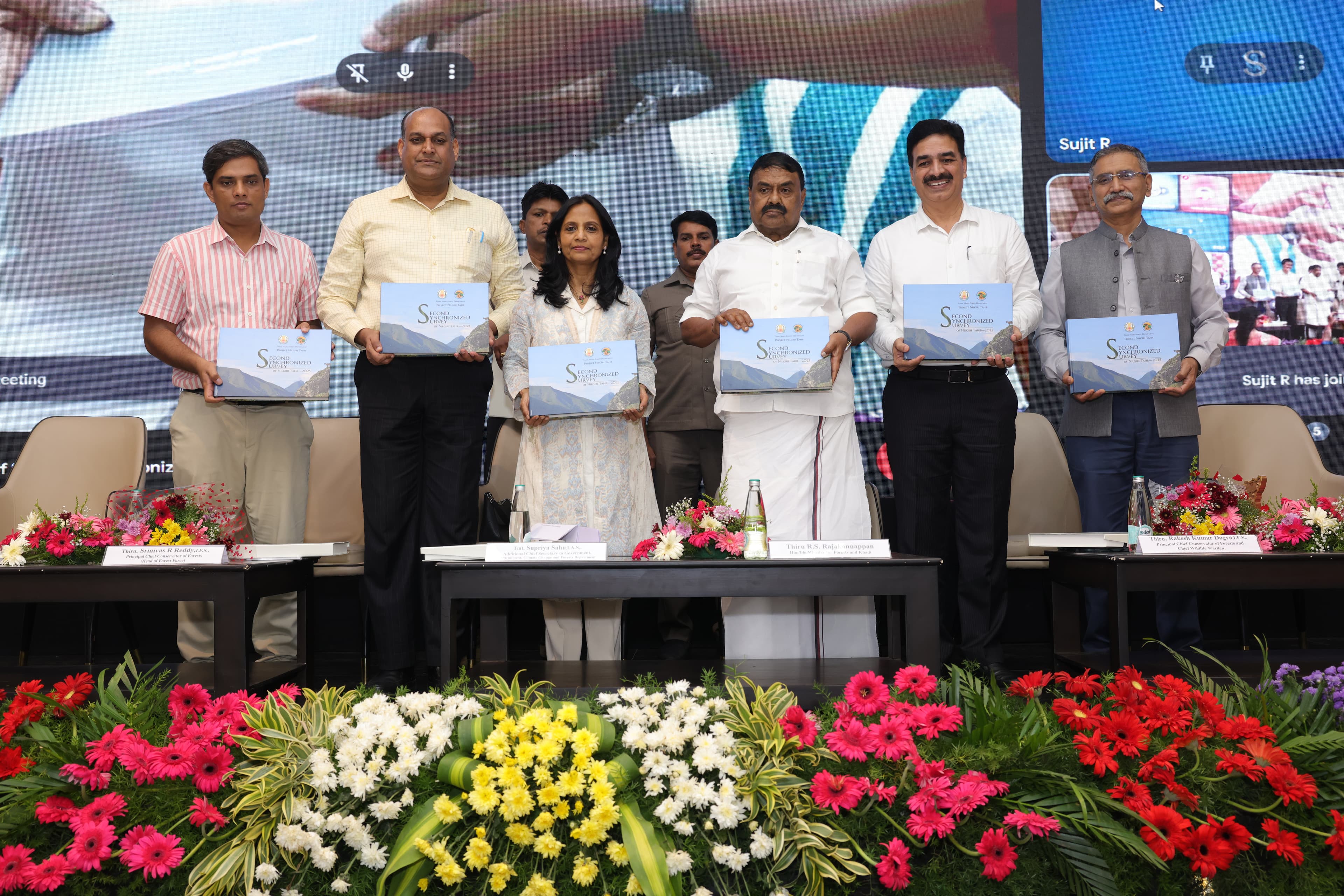
Building on the success of the first synchronized survey, the second survey was conducted from April 24 to 27, 2025, covering an even larger area with improved methods and expanded goals. This time, the survey included 177 blocks across 14 forest divisions, with a special focus on historically significant landscapes like the Ibex Hills in the Kodaikanal Division. A total of 780 personnel were mobilized, including forest officers, scientists, and local field staff, marking one of the largest conservation mobilizations in the region’s history.
The 2025 survey introduced threat assessment protocols for the first time, enabling teams to map and analyze pressures such as invasive species, habitat fragmentation, and fire. Remarkably, 36 new blocks were surveyed, leading to significant discoveries. For example, Nilgiri Tahrs were directly sighted at Chinnattumalai (Coimbatore Division) after a decade, indicating successful natural dispersal. Dry pellets found at Mangaladevi (Megamalai Division) confirmed the continued presence of the species in a landscape where they were once thought to be locally extinct. Additionally, the first-ever sighting at Peyar Varaiyattumottai (Nellai Wildlife Sanctuary) expanded the known distribution range.
The results revealed a significant increase in population, with Tamil Nadu recording 1,303 individuals and Kerala 1,352 individuals, bringing the total to 2,655 individuals across both states. This growth demonstrates the effectiveness of ongoing conservation actions, including habitat restoration and control of invasive species like wattle. However, challenges remain, as isolated populations in regions like Nellai Wildlife Sanctuary continue to face severe anthropogenic pressures, with some subpopulations numbering fewer than 15 individuals.
By combining advanced technologies like drones and camera traps with traditional field surveys, the 2025 effort set new standards for wildlife monitoring. These findings will guide future actions, including reintroductions into historical habitats and strengthening connectivity among fragmented populations, ensuring the survival of this iconic species for generations to come.