
Government of Tamil Nadu
Tamil Nadu Forest Department
Project Nilgiri Tahr / நீலகிரி வரையாடு திட்டம்
Tamil Nadu Forest Department
First Synchronized Survey of Nilgiri Tahr – A Landmark Step in Conservation
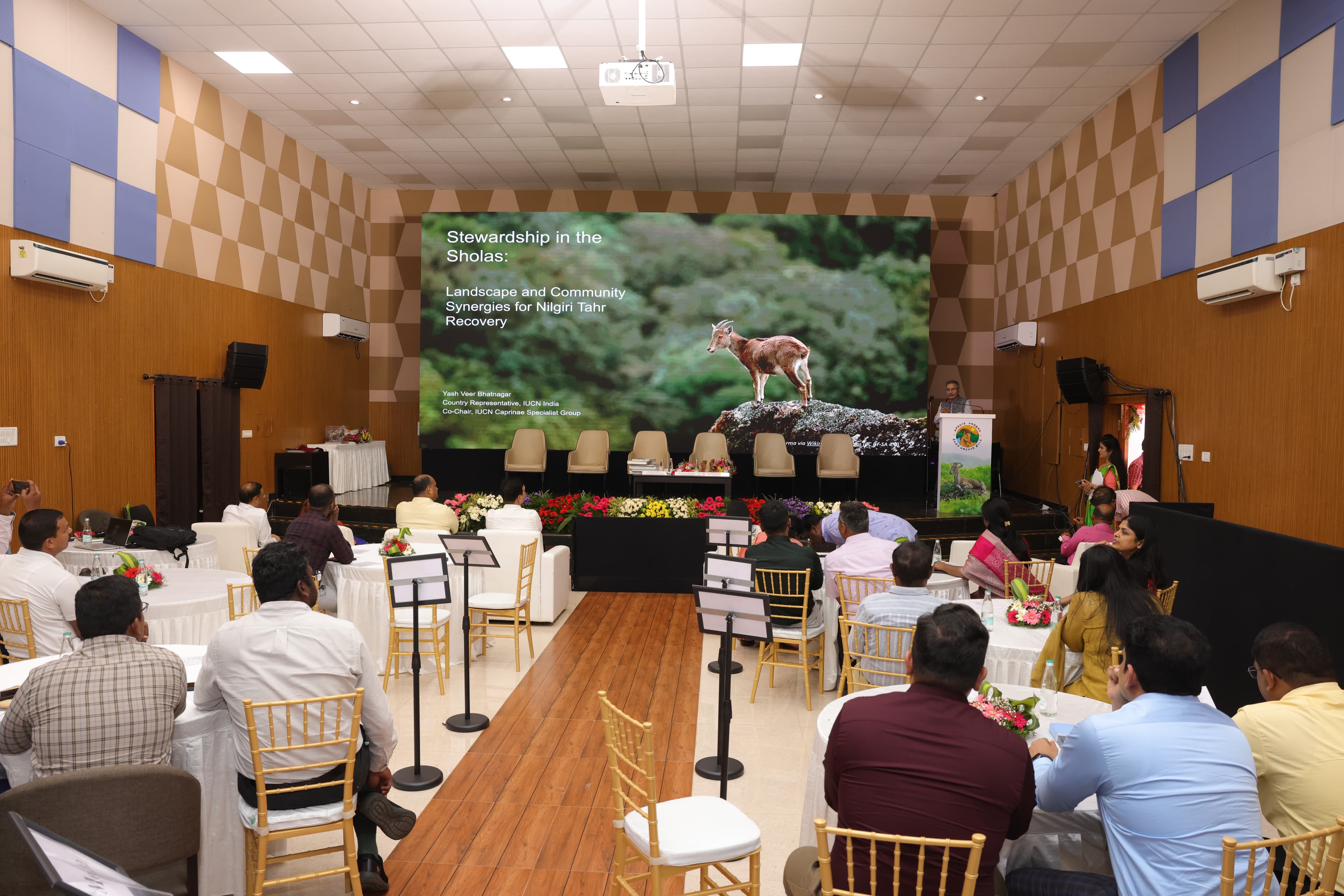
The first-ever synchronized survey of the Nilgiri Tahr was a historic milestone in wildlife conservation, bringing together multiple stakeholders across two states—Tamil Nadu and Kerala. Conducted between April 29 and May 1, 2024, the survey spanned 13 forest divisions, 36 ranges, five elephant reserves, and six wildlife sanctuaries across the Southern Western Ghats. This extensive effort involved 708 team members, including forest officers, scientists, veterinarians, and field biologists, who trekked a total of 1,862 kilometres through rugged terrains to assess the population of this endangered mountain ungulate. The survey was unique as it used a hybrid scientific methodology combining the Double Observer and Bounded Count techniques, ensuring accurate and reliable population data.
For the first time, cutting-edge tools like drones were deployed to monitor inaccessible areas, while DNA samples were collected to build a genetic repository of the species. A total of 11 training programs were held to prepare frontline staff, equipping them with skills in survey protocols and habitat management. The results revealed that Tamil Nadu hosts 1,031 Nilgiri Tahrs, while adjoining Kerala habitats contributed 1,229 individuals, bringing the total population across both states to 1,858 individuals. The survey also identified five individuals affected by skin lumps, highlighting the need for health monitoring.
The Anamalai Hills emerged as a critical stronghold, accounting for 41% of Tamil Nadu’s population, followed by the Nilgiris landscape at 24%. Importantly, new habitats like Pasumalai were documented, showing the species’ resilience and adaptability. These findings provide a scientific foundation for future conservation strategies, ensuring that management plans are informed by robust, data-driven insights. The report was released by the Honourable State Forest Minister, Thiru K. Ponmudy, on December 18, 2025, marking a turning point in the state’s efforts to protect its iconic state animal.